Why I built it
A lot of WordPress sites grow quietly. Posts, pages, custom post types and taxonomy archives keep piling up, but the actual content volume becomes hard to measure in any simple way.
I built this plugin for the moments when a rough impression is not enough. SEO audits, migration estimates, editorial reviews, and agency reporting all benefit from a clearer picture of how much content exists and how it is distributed across a site. The goal was not to build a heavy analytics dashboard. It was to make one narrow question easier to answer.
What it does
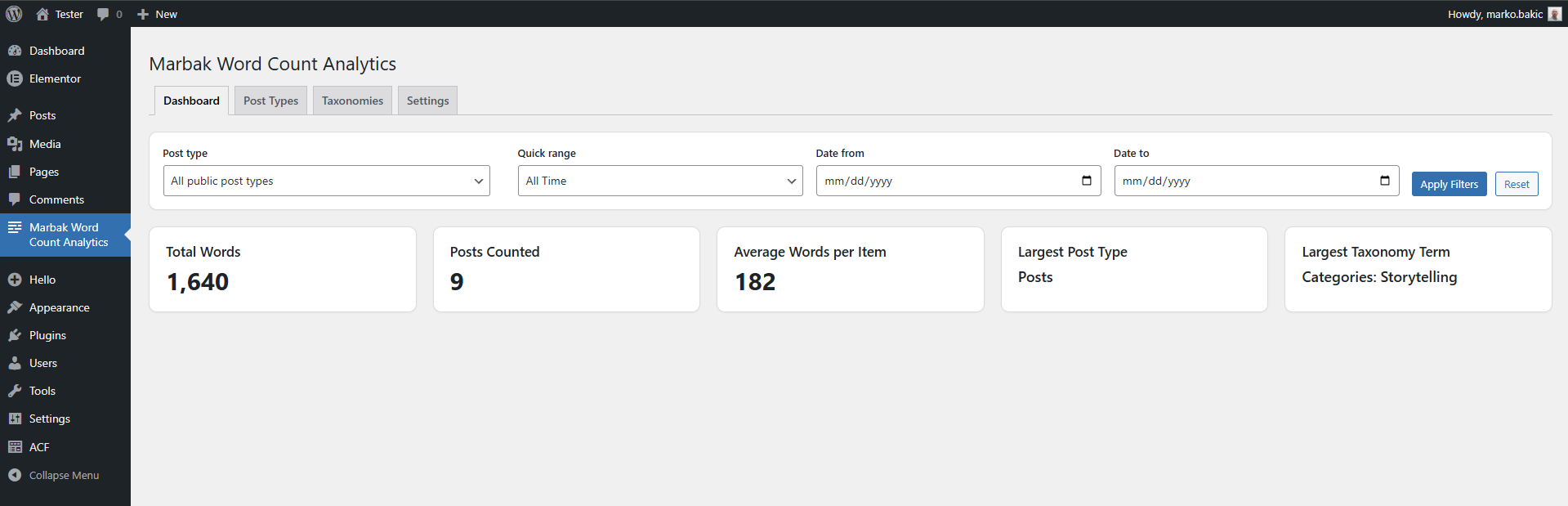
- Shows total words, posts counted, and average words per item in an overview screen
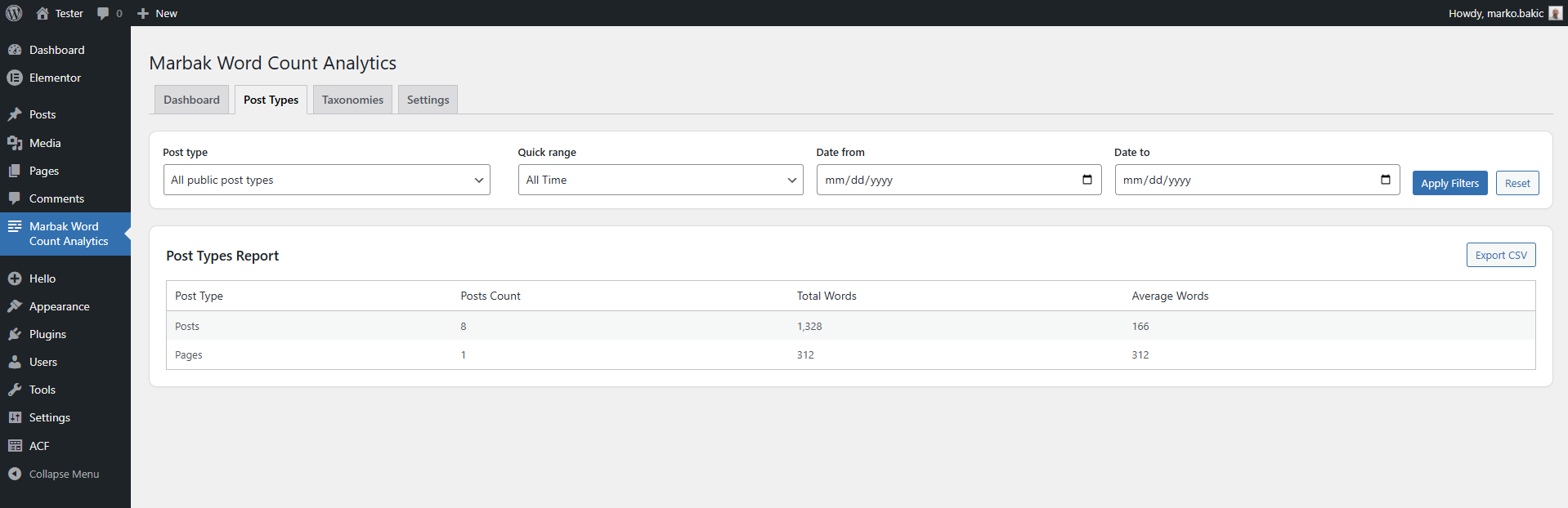
- Reports word counts by post type, including custom post types
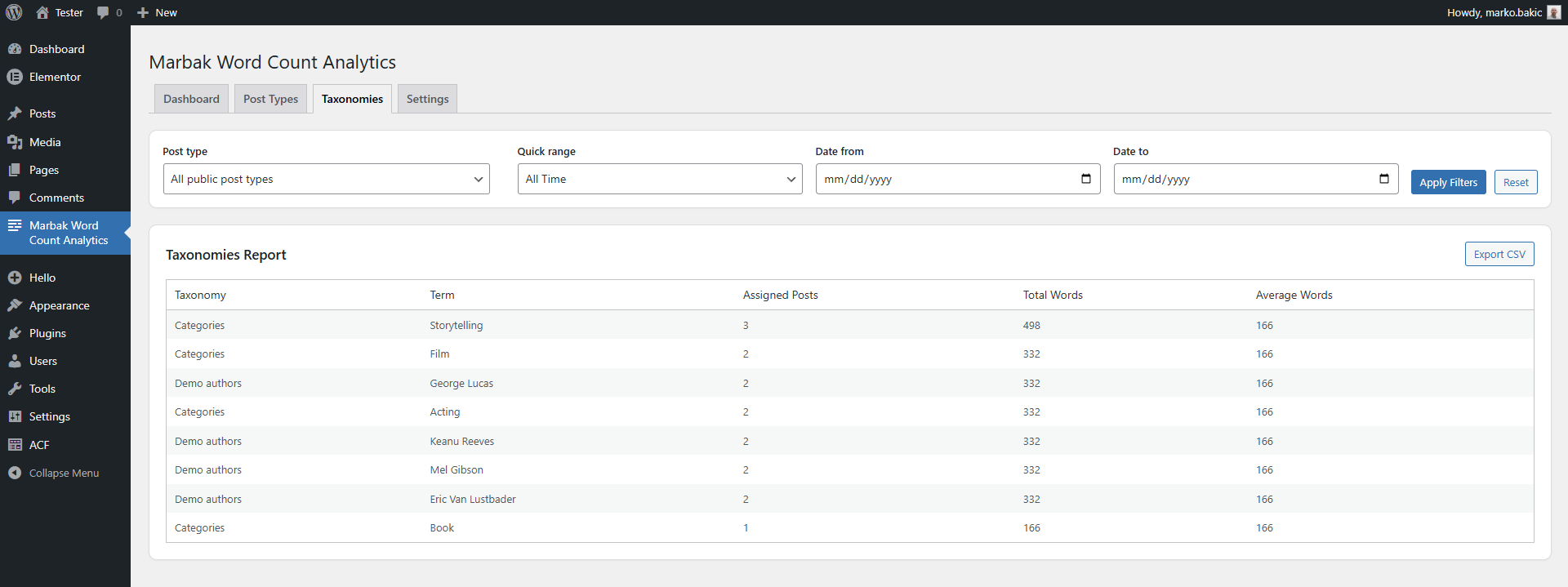
- Reports word counts by taxonomy term, including categories, tags, and custom taxonomies
- Includes quick date filters for the last 7 days, 30 days, and 12 months, plus custom date range filtering
- Exports post type and taxonomy reports to CSV
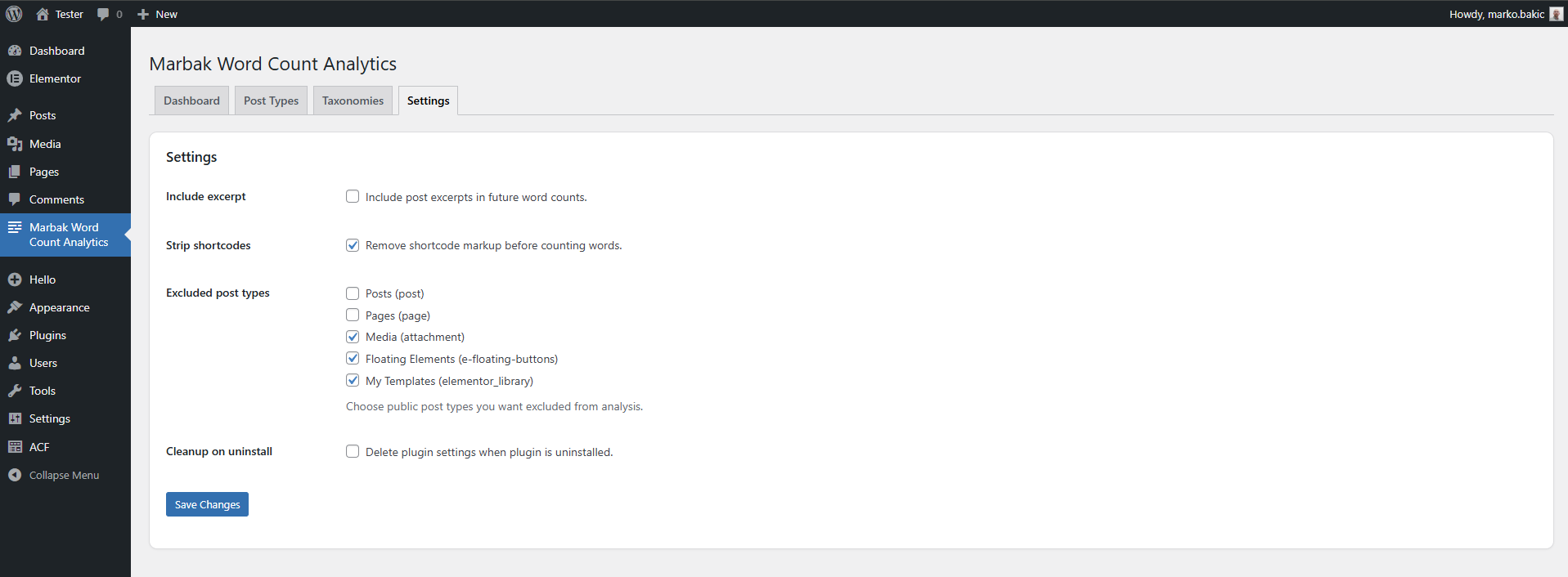
- Lets you exclude selected post types from analysis
- Optionally includes post excerpts
- Optionally strips shortcode markup before counting
Watch a Quick Demo
See Word Count Analytics in action and learn how to measure content volume across post types and taxonomy terms.
Use cases
- Reviewing thin or underdeveloped sections during an SEO content audit
- Estimating content volume before a migration to another CMS or a redesign
- Reporting monthly production across blog posts, case studies, or other custom post types
- Comparing how much content sits under different categories or custom taxonomies
- Getting a clearer editorial overview on larger multi-section WordPress sites
Interface / How it works
The plugin adds a small admin area with an overview screen, a post types report, a taxonomies report, and a settings screen. Reports are generated after clicking Apply Filters, which keeps the first load lighter on larger sites. You can filter by post type and date range, then export the current results as CSV if needed. Screenshots on the WordPress.org page show the published interface clearly: overview, post types table, taxonomies table, and settings.
Scope / Philosophy
This is intentionally a small tool. It focuses on native WordPress content fields and optional excerpts. It does not try to count everything stored in custom fields or builder data, because that would turn a simple reporting plugin into something much heavier and less predictable. Right now the value is in keeping the scope narrow and the output easy to read.